Yorkshire
Historic county of Northern England with a strong regional identity.
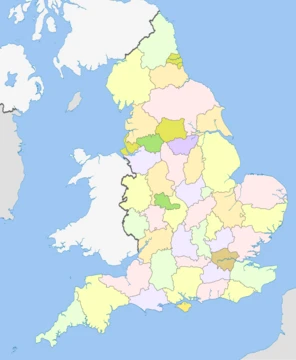
Yorkshire is a historic county in Northern England, named after the city of York. Though it no longer serves an administrative purpose, the area still has a strong regional identity. The county was once the largest in the United Kingdom by area. It was bordered by County Durham to the north, the North Sea to the east, and to the south by Lincolnshire, Nottinghamshire, Derbyshire, and Cheshire, with Lancashire and Westmorland to the west.
The landscape varies widely. The North York Moors lie in the northeast, while the centre holds the Vale of Mowbray and the Vale of York. The western part includes sections of the Pennines, notably the Yorkshire Dales. Yorkshire has a coastline along the North Sea. Major cities in the southwest include Leeds, Sheffield, Bradford, Doncaster, and Wakefield. The north and east contain the southern part of the Teesside conurbation, and the port city of Hull sits in the southeast. York itself is near the centre.
Historically, the county was subdivided from the Middle Ages. York became a self-governing county corporate in 1396, and the rest was split into three ridings: North, East, and West. From 1660, each riding had its own lord-lieutenant, and between 1889 and 1974 they were administrative counties. A Sheriff of Yorkshire existed until 1974. Today, four modern ceremonial counties—East Riding of Yorkshire, North Yorkshire, South Yorkshire, and West Yorkshire—cover most of the historic area.
The county’s boundaries were fairly stable from 1182 (when it gave western land to Lancashire) until 1889, when administrative counties were created and some adjustments followed. Later changes in 1974 divided the historic county further, with parts going to Humberside, Cleveland, County Durham, Cumbria, Lancashire, and Greater Manchester, while South Yorkshire gained areas from Nottinghamshire. Cleveland and Humberside were abolished in 1996, leaving the four ceremonial counties. A region called Yorkshire and the Humber covers a similar area, though it excludes parts of North Yorkshire that were in Cleveland and includes North East Lincolnshire and North Lincolnshire. Until 2009, some government powers were devolved to the Yorkshire and Humber Assembly; since then, the region has been used mainly for statistics.
The name Yorkshire comes from York’s shire. The word York likely comes from the Brittonic *Eburākon*, meaning ‘place of yew tre
- Area
- Largest by area in the United Kingdom
- Named after
- City of York
- Historic county
- Yorkshire
- Modern ceremonial counties
- East Riding of Yorkshire, North Yorkshire, South Yorkshire, West Yorkshire
- Emblem
- White rose
- Observed day
- Yorkshire Day, 1 August
Lore & Background
Yorkshire was historically bordered by County Durham to the north, the North Sea to the east, Lincolnshire, Nottinghamshire, Derbyshire, and Cheshire to the south, and Lancashire and Westmorland to the west. From the Middle Ages the county was subdivided into smaller administrative areas; the city of York was a self-governing county corporate from 1396, and the rest of the county was divided into three ridings – North, East, and West. From 1660 onwards each riding had its own lord-lieutenant, and between 1889 and 1974 the ridings were administrative counties. There was a Sheriff of Yorkshire until 1974.
The south-west of Yorkshire includes the cities of Leeds, Sheffield, Bradford, Doncaster and Wakefield. The north and east of the county includes the southern part of the Teesside conurbation; the port city of Hull is located in the south-east. York is positioned near the centre of the county. Yorkshire has a coastline on the North Sea. The North York Moors occupy the north-east of the county, and the centre contains the Vale of Mowbray and the Vale of York. The west contains part of the Pennines, which includes the Yorkshire Dales.
Reader's Guide
Yorkshire's significance lies in its historical role as the largest county in the United Kingdom and its enduring cultural identity, despite no longer being used for administration. The county's name is preserved in four modern ceremonial counties: East Riding of Yorkshire, North Yorkshire, South Yorkshire, and West Yorkshire, which together cover most of the historic area. Yorkshire is represented in sport by Yorkshire County Cricket Club and Yorkshire Rugby Football Union. Its emblem, a white rose, originates from the heraldic badge of the Plantagenet royal House of York. The county is sometimes referred to as 'God's own country'. Yorkshire Day is observed annually on 1 August, celebrating the general culture of Yorkshire, including its history and dialect. The name is used by several institutions, such as the Royal Yorkshire Regiment of the British Army. The region Yorkshire and the Humber covers a similar area to the combined four ceremonial counties, with some exceptions. The etymology of Yorkshire derives from it being the shire of the city of York, with the word York believed to have originated from the Brittonic word Eburākon, meaning 'place of yew trees'.
Did You Know?
- Yorkshire was the largest county by area in the United Kingdom.
- The county was named after the city of York.
- Yorkshire Day is observed annually on 1 August.
- The emblem of Yorkshire is a white rose, originally the heraldic badge of the Plantagenet royal House of York.
More in English Counties 25-39
Elsewhere in the English Counties universe
Spotted an error? Know more?
This is a living reference — every entry is fact-audited, and reader corrections feed straight into our audit queue. Suggest an edit · See this site's audit record