Berkshire
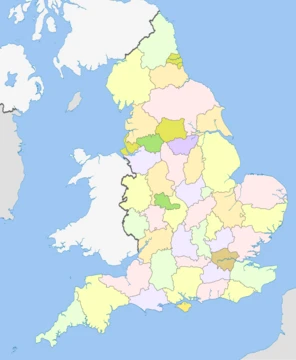
Royal County of Berkshire, historic and ceremonial county in South East England.
Berkshire, officially the Royal County of Berkshire, is a ceremonial county in South East England. It has been a significant region since the Anglo-Saxon period, contested by Mercia and Wessex, and is the site of Windsor Castle, the official country residence of the British monarch. The county played a role in the First English Civil War and the Glorious Revolution, and its proximity to London drove development from the 19th century onward.
- area
- 1,263 km² (488 sq mi)
- estimated_population_2024
- 992,327
- county_town
- Reading
- largest_settlement
- Reading
- highest_point
- Walbury Hill at 297 m (974 ft)
- royal_title_granted
- 1957
- flag_registered
- 2017
Lore & Background
Berkshire takes its name from a wood of box trees called Bearroc, a Celtic word meaning 'hilly', as recorded in Asser's biography of King Alfred. The county's early history is documented in the Chronicles of the Abingdon Abbey, which held extensive possessions and judicial powers. Berkshire and Oxfordshire shared a common sheriff until the reign of Elizabeth I, and the shire court was held at Grandpont. Reading became the new county town in 1867, replacing Abingdon.
The county has been the site of notable battles, including Alfred the Great's campaigns against the Danes at Englefield, Ashdown, and Reading. During the First English Civil War, the First and Second Battles of Newbury occurred in 1643 and 1644, and Donnington Castle was reduced to ruin. The Battle of Reading on 9 December 1688 was the only substantial military action in England during the Glorious Revolution, ending in a decisive victory for forces loyal to William of Orange.
Boundary changes occurred under the Local Government Act 1972, with parts of northern Berkshire transferred to Oxfordshire. On 1 April 1998, Berkshire County Council was abolished, and the districts became unitary authorities, though the non-metropolitan county was not abolished. A flag for the historic county was registered with the Flag Institute in 2017.
Reader's Guide
Berkshire's significance lies in its long history as a royal and strategic county. The presence of Windsor Castle, built after the Norman Conquest, and the granting of the title 'Royal County' in 1957 underscore its ties to the monarchy. The county was a contested region in the Anglo-Saxon period and a battleground during the English Civil War and the Glorious Revolution. Its proximity to London spurred industrial and residential growth from the 19th century, with Slough becoming an industrial centre and Bracknell designated a new town. Today, the eastern part of the county is dominated by software development and high-tech industry, while the west remains agricultural. The Berkshire Downs, a chalk downland and area of outstanding natural beauty, occupy the west and are the source of the River Kennet. The county's population is concentrated in the east, near Greater London, in towns such as Reading, Slough, Bracknell, and Maidenhead. For local government, Berkshire comprises six unitary authorities: Bracknell Forest, Reading, Slough, West Berkshire, Windsor and Maidenhead, and Wokingham. The historic county included parts of Oxfordshire south of the River Thames but excluded Caversham and Slough.
Did You Know?
- Berkshire's name derives from a wood of box trees called Bearroc, a Celtic word meaning 'hilly'.
- The county received the title 'Royal County' in 1957 due to the presence of Windsor Castle.
- The Battle of Reading on 9 December 1688 was the only substantial military action in England during the Glorious Revolution.
- The highest point in Berkshire is Walbury Hill at 297 m (974 ft).
More in English Counties 25-39
Elsewhere in the English Counties universe
Spotted an error? Know more?
This is a living reference — every entry is fact-audited, and reader corrections feed straight into our audit queue. Suggest an edit · See this site's audit record