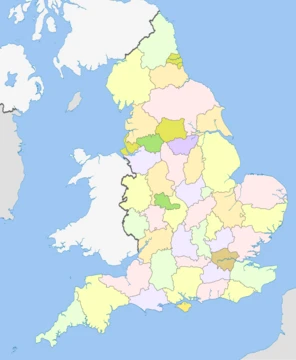
Wiltshire
Ceremonial county in South West England with ancient stone circles.
Wiltshire is a ceremonial county in South West England, known for its predominantly rural landscape and significant prehistoric archaeology. It is home to the UNESCO World Heritage Site of Stonehenge and Avebury stone circles, and its largest settlement is Swindon.
- Area
- 3,485 km² (1,346 sq mi)
- Estimated Population (2024)
- 767,575
- Largest Settlement
- Swindon
- Major Rivers
- Northern Avon and Southern Avon
- Highest Point
- Tan Hill–Milk Hill ridge at 295 m (968 ft)
- Notable Landmarks
- Stonehenge, Avebury, Salisbury Cathedral, Longleat, Stourhead
Lore & Background
The county's economy was historically agricultural, with 390 mills recorded at the Domesday Survey and sheep-farming prominent in later centuries. The Cistercian monastery of Stanley exported wool to Florentine and Flemish markets in the 13th and 14th centuries. In 1794, the Royal Wiltshire Yeomanry was formed at the Bear Inn in Devizes, serving in the Boer War and both World Wars. The Kennet and Avon Canal was built around 1800, providing a transport route from Bristol to London before the Great Western Railway. The local nickname for natives is 'Moonrakers,' originating from a story of smugglers hiding alcohol in a pond and claiming to rake a moon reflection.
Reader's Guide
Wiltshire's significance lies in its exceptional prehistoric heritage, particularly the Stonehenge and Avebury stone circles, which together form a UNESCO World Heritage Site. These monuments, along with other ancient landmarks on Salisbury Plain, offer profound insights into Neolithic and Bronze Age societies. The county's chalk downlands, including Salisbury Plain, the Marlborough Downs, and Cranborne Chase, have yielded extensive archaeology. Wiltshire also features notable medieval architecture, such as Salisbury Cathedral, and historic country houses like Longleat and Stourhead. Its landscape is protected through national landscapes and the New Forest National Park. The county's history includes Saxon battles, Norman influence, Civil War conflicts, and the formation of the Royal Wiltshire Yeomanry. The Kennet and Avon Canal and the Great Western Railway shaped its transport history. The 'Moonrakers' nickname reflects local folklore. Today, Wiltshire remains largely rural, with Swindon as its largest settlement and two unitary authorities for local government.
Did You Know?
- The county's name derives from the former county town of Wilton, written as Wiltunscir in the 9th century.
- The Battle of Bedwyn was fought in 675 between Escuin and King Wulfhere of Mercia.
- The local nickname 'Moonrakers' originates from a story of smugglers hiding alcohol in a pond and claiming to rake a moon reflection.
- The highest point in Wiltshire is the Tan Hill–Milk Hill ridge at 295 m (968 ft) above sea level.
More in English Counties 25-39
Elsewhere in the English Counties universe
Spotted an error? Know more?
This is a living reference — every entry is fact-audited, and reader corrections feed straight into our audit queue. Suggest an edit · See this site's audit record