Rutland
Smallest historic English county, now a unitary authority.
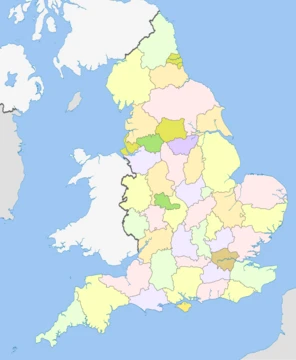
Rutland is a ceremonial county in the East Midlands of England, bordered by Leicestershire, Lincolnshire, and Northamptonshire. It is the second-smallest ceremonial county by population after the City of London, with an estimated 41,443 residents in 2024, and was the smallest of the historic counties of England. The county is rural, with only two towns—Oakham and Uppingham—and is known for its low, rolling hills and the large artificial lake Rutland Water, created in the 1970s.
- area
- 382 km² (147 sq mi)
- population_2024
- 41,443
- highest_point
- 197 m (646 ft) at Cold Overton Park
- lowest_point
- 17 m (56 ft) near Belmesthorpe
- county_town
- Oakham
- established_as_county
- First mentioned in 1179
- unitary_authority_since
- 1997
Lore & Background
Rutland is first mentioned as Roteland in the Domesday Book of 1086, meaning 'land belonging to Rōta'. It became a distinct county in 1179. During the High Middle Ages, much of the area was forested and used as hunting grounds. The wool trade was important in the 16th century. Older buildings are built from local limestone or ironstone, with roofs of Collyweston stone slate or thatch. The county's main industry is agriculture, with a limestone quarry near Ketton.
Reader's Guide
Rutland's significance lies in its long history as a distinct county, its successful resistance to being absorbed into Leicestershire in the 1960s, and its eventual restoration as a ceremonial county in 1997. The county's small size and strong local identity led to a notable campaign against a proposed merger with Leicestershire, including a publicity stunt with a pretend battleship. Rutland Water, created in the 1970s, became the largest man-made lake in Europe at the time and is now a nature reserve and tourist attraction. The county also preserves a well-preserved Norman building, Oakham Castle, and has yielded a significant dinosaur fossil, Cetiosaurus oxienensis, at Great Casterton.
Did You Know?
- Rutland was first mentioned as a distinct county in 1179.
- Rutland Water, created in the 1970s, was the largest man-made lake in Europe when completed.
- A well-preserved specimen of the sauropod dinosaur Cetiosaurus oxienensis was found at Great Casterton.
- Rutland's highest point is 197 m (646 ft) at Cold Overton Park.
More in English Counties 25-39
Elsewhere in the English Counties universe
Spotted an error? Know more?
This is a living reference — every entry is fact-audited, and reader corrections feed straight into our audit queue. Suggest an edit · See this site's audit record