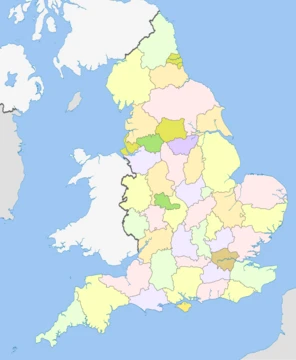
Hampshire
Ceremonial county in South East England, historically crucial for ports and military.
Hampshire is a ceremonial county in South East England, abbreviated to Hants. It is bordered by Berkshire, Surrey, West Sussex, the Isle of Wight, Dorset, and Wiltshire, with Southampton as its largest settlement. The county has an area of 3,769 km² and an estimated population of 1,920,959 in 2024. Historically significant for its ports and military role, Hampshire was a departure point for colonists who settled in North America, naming New Hampshire after it.
- area
- 3,769 km² (1,455 sq mi)
- population_2024_estimate
- 1,920,959
- largest_settlement
- Southampton
- county_town_historic
- Winchester
- abbreviation
- Hants
- ceremonial_county
- South East England
Lore & Background
Hampshire's recorded history dates to Roman Britain, when its chief town was Venta Belgarum (now Winchester). The county was recorded in Domesday Book as divided into 44 hundreds. From the 12th century, port settlements grew due to trade in wool, cloth, fishing, and shipbuilding, and by the 16th century Southampton had become more populous than Winchester. In 20th century conflicts, including World War One and Two, Hampshire played a crucial military role due to its ports.
The Saxon settlement at Southampton was known as Hamtun, and the surrounding area as Hamtunscīr. The Domesday Book recorded it as Hantescire, from which the modern abbreviation 'Hants' derives. From 1889 until 1959, the administrative county was named the County of Southampton, also called Southamptonshire. Hampshire was a departure point for several groups of colonists who left for the east coast of North America during the 17th century, and many inhabitants settled there, naming the land New Hampshire.
Undulating hills characterise much of the county, with a belt of chalk crossing from north-west to south-east. Major rivers include the Loddon, Wey, Itchen, and Test. The south-west contains the New Forest, one of the largest expanses of ancient woodland remaining in England. The county historically contained Bournemouth, Christchurch, and the Isle of Wight.
Reader's Guide
Hampshire's significance lies in its long history as a centre of trade, military power, and colonial emigration. Its ports, particularly Southampton and Portsmouth, were vital from the 12th century onward, driving economic growth through wool, cloth, fishing, and shipbuilding. By the 16th century, Southampton surpassed Winchester in population. In the 20th century, Hampshire's ports were crucial in both World Wars. The county also served as a departure point for 17th-century colonists who founded New Hampshire in North America. Its landscape includes the New Forest, a large ancient woodland, and chalk hills forming the Hampshire and South Downs. The county's Roman heritage, with Venta Belgarum (Winchester) as a key town, and its Jutish settlement period add depth to its legacy. Today, Hampshire comprises a non-metropolitan county with eleven districts and two unitary authorities (Portsmouth and Southampton), reflecting its enduring administrative and cultural importance in South East England.
Did You Know?
- Hampshire's abbreviation 'Hants' derives from the Domesday Book spelling 'Hantescire'.
- The county was a departure point for 17th-century colonists who named New Hampshire after it.
- The New Forest in south-west Hampshire is one of the largest expanses of ancient woodland remaining in England.
- From 1889 until 1959, the administrative county was named the County of Southampton.
More in English Counties 1-24
Elsewhere in the English Counties universe
Spotted an error? Know more?
This is a living reference — every entry is fact-audited, and reader corrections feed straight into our audit queue. Suggest an edit · See this site's audit record