Nottinghamshire
Ceremonial county in the East Midlands of England.
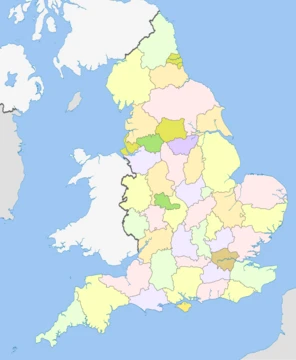
Nottinghamshire (abbreviated Notts.) is a ceremonial county in the East Midlands of England. It is bordered by South Yorkshire, Lincolnshire, Leicestershire, and Derbyshire, with the city of Nottingham as its largest settlement. The county is historically significant for its role in the legend of Robin Hood, its Roman and Anglo-Saxon heritage, and its industrial development during the Industrial Revolution, particularly in coal mining and early waggonways.
- Area
- 2,160 km² (830 sq mi)
- Population (2024)
- 1,188,090
- Largest settlement
- Nottingham
- Highest point
- 205 metres (673 feet) on the boundary with Derbyshire
- Lowest point
- Peat Carr, east of Blaxton, at sea level
- County flower
- Not specified in source
Lore & Background
Nottinghamshire lies on the Roman Fosse Way and contains Roman settlements, such as at Mansfield, and forts like the Broxtowe Estate in Bilborough. The county was settled by Angles around the 5th century and became part of the Kingdom, and later Earldom, of Mercia. The name first occurs in 1016, but until 1568 the county was administratively united with Derbyshire under a single Sheriff. In Norman times, the county developed malting and woollen industries. William the Conqueror made Sherwood Forest a Royal Forest for hunting in 1066, and the Domesday Book of 1086 identified areas such as Mansfield and Sutton in Ashfield as being under the land of King Edward the Confessor.
During the Industrial Revolution, Nottinghamshire held coal and iron ore and constructed some of the first experimental waggonways in the world, such as the Wollaton wagonway of 1603–1616. This led to canals and railways, and the lace and cotton industries grew. In the 18th and 19th centuries, mechanised deeper collieries opened, though no working mines remain. The county is also famous for its involvement with the legend of Robin Hood, which drives tourism to Sherwood Forest, the City of Nottingham, and surrounding villages. The University of Nottingham began the Nottingham Caves Survey in 2010 to increase tourist potential of sandstone caves.
Nottinghamshire was first mapped by Christopher Saxton in 1576, and the first fully surveyed map was Chapman's Map of Nottinghamshire in 1774. The county saw a slight boundary change in 1974 when the villages of Blaxton, Finningley, and Auckley (part) were merged into Doncaster in South Yorkshire.
Reader's Guide
Nottinghamshire's significance lies in its layered history from Roman occupation through Anglo-Saxon settlement, its role as a royal hunting ground, and its industrial innovations. The county's geography, defined by the River Trent and Sherwood Forest, shaped its development. The legend of Robin Hood, rooted in Sherwood Forest, has made Nottinghamshire a global tourist destination. Politically, the county has seen shifts in control, with the 2025 County Council election resulting in a Reform UK majority. The county's economy, once based on coal mining and manufacturing, has transitioned, though the legacy of early waggonways and canals remains important. The planned local government reorganisation by April 2028, creating two unitary authorities, marks a significant future change. Nottinghamshire's green belt, first drawn up in the 1950s, encircles the Nottingham conurbation and extends into Derbyshire, reflecting ongoing efforts to manage urban growth.
Did You Know?
- Nottinghamshire was administratively united with Derbyshire under a single Sheriff until 1568.
- The Wollaton wagonway of 1603–1616 was one of the first experimental waggonways in the world.
- The county's highest natural point is 205 metres on the boundary with Derbyshire, while Silverhill, a human-made spoil heap, reaches 204 metres.
- The Nottingham Caves Survey, begun in 2010, uses a 3D laser scanner to record more than 450 sandstone caves.
More in English Counties 1-24
Elsewhere in the English Counties universe
Spotted an error? Know more?
This is a living reference — every entry is fact-audited, and reader corrections feed straight into our audit queue. Suggest an edit · See this site's audit record