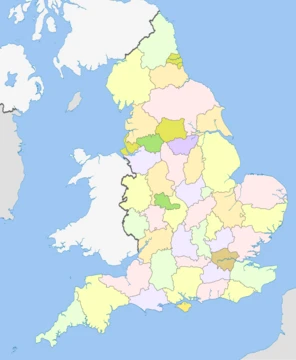
Lancashire
Historic county in North West England, key to the Industrial Revolution.
Lancashire is a ceremonial county in North West England, bordered by Cumbria, North Yorkshire, West Yorkshire, Greater Manchester, Merseyside, and the Irish Sea. Its largest settlement is Preston. The county was founded in the 12th century and rapidly industrialized during the Industrial Revolution, becoming a major center for textile manufacturing and coal mining.
- area
- 3,079 square kilometres (1,189 sq mi)
- estimated_population_2024
- 1,601,645
- highest_point
- Gragareth or Green Hill, both approximately 628 m (2,060 ft)
- established
- 12th century
- ceremonial_county_status
- Yes
- major_rivers
- Lune, Wyre, Ribble
Lore & Background
Lancashire was founded in the 12th century; in the Domesday Book of 1086 much of what would become the county is treated as part of Yorkshire and Cheshire. Until the Early Modern period the county was a comparatively poor backwater, although in 1351 it became a palatine, with a semi-independent judicial system. This changed during the Industrial Revolution, when the county rapidly industrialised; until 1974 it included both Liverpool, a major port, and Manchester, which with its surrounding towns dominated the manufacture of textiles. The Lancashire coalfield was also exploited, with many collieries opening. By 1971 Lancashire had a population of 5,118,405, which made it the most heavily populated county in the United Kingdom after Greater London.
Reader's Guide
Lancashire's significance lies in its transformation from a poor backwater to a powerhouse of the Industrial Revolution. Its textile mills and coal mines drove economic growth, and its ports connected Britain to global trade. The county's historical boundaries included Manchester and Liverpool, though these were removed in the 1974 local government reorganization. Today, Lancashire retains a strong cultural identity, with its coastal plains, upland areas like the Forest of Bowland, and historic towns such as Lancaster and Preston. The county's legacy is evident in its industrial heritage, its role in the development of modern Britain, and its continued importance as a ceremonial and administrative entity.
Did You Know?
- Lancashire was founded in the 12th century, but in the Domesday Book of 1086 much of the area was treated as part of Yorkshire and Cheshire.
- The county became a palatine in 1351, granting it a semi-independent judicial system.
- By 1971, Lancashire had a population of 5,118,405, making it the most heavily populated county in the UK after Greater London.
- The highest point in Lancashire is either Gragareth or Green Hill, both approximately 628 m (2,060 ft) high.
More in English Counties 1-24
Elsewhere in the English Counties universe
Spotted an error? Know more?
This is a living reference — every entry is fact-audited, and reader corrections feed straight into our audit queue. Suggest an edit · See this site's audit record