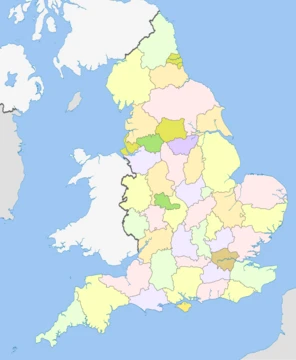
Oxfordshire
Historic county in South East England, home to Oxford University.
Oxfordshire (pronounced OKS-fərd-shər or -sheer, often shortened to Oxon) is a ceremonial county in South East England. It shares borders with Northamptonshire and Warwickshire to the north, Buckinghamshire to the east, Berkshire to the south, and Wiltshire and Gloucestershire to the west. The county’s biggest settlement is the city of Oxford, known worldwide for its university. Covering 1,006 square miles (2,605 km²), Oxfordshire is mostly rural, with an estimated 763,218 residents as of 2024.
The county first appears in records as a county in the early 900s. It sits between the River Thames to the south, the Cotswolds to the west, the Chilterns to the east, and the Midlands to the north, with extensions reaching south to Henley-on-Thames and north to Banbury. Though its central location made it valuable farmland, the Romans paid it little attention. Its importance grew only after a settlement formed at Oxford in the 700s. Alfred the Great was born across the Thames in Wantage, in the Vale of White Horse. Oxford University was founded in 1096, though its college system came later. The name Oxford comes from the Anglo-Saxon *Oxenaford*, meaning “ford for oxen.” The university rose in influence during the Middle Ages and early modern period. From the 1200s, the Cotswolds wool trade brought wealth, especially to the county’s western parts. Morris Motors started in Oxford in 1912, introducing heavy industry to what had been an agricultural county. Farming’s role as an employer shrank sharply in the 1900s; by 2023, only 1.2% of the population worked in agriculture, forestry, or fishing, due to high mechanisation. Still, Oxfordshire remains heavily agricultural in land use, with a lower population than neighbouring Berkshire and Buckinghamshire, both smaller in area.
For most of its history, the county was split into fourteen hundreds: Bampton, Banbury, Binfield, Bloxham, Bullingdon, Chadlington, Dorchester, Ewelme, Langtree, Lewknor, Pyrton, Ploughley, Thame, and Wootton. The main army unit, the Oxfordshire and Buckinghamshire Light Infantry, was based at Cowley Barracks on Bullingdon Green, Cowley.
The Vale of White Horse district and parts of South Oxfordshire south of the Thames were historically in Berkshire. In 1974, under the Local Government Act 1972, Abingdon, Didcot, Faringdon, Wallingford, and Wantage were added to Oxfordshire’s administrative count
- area
- 1,006 sq mi (2,605 km2)
- population_2024
- 763,218
- largest_settlement
- Oxford
- county_type
- Ceremonial county
- highest_point
- White Horse Hill (261 m / 856 ft)
- established
- Early 10th century
Lore & Background
Oxfordshire was recorded as a county in the early years of the 10th century, lying between the River Thames to the south, the Cotswolds to the west, the Chilterns to the east, and the Midlands to the north. It was largely ignored by the Romans and did not grow in importance until the formation of a settlement at Oxford in the 8th century. The University of Oxford was founded in 1096, though its collegiate structure developed later. The county was part of the Cotswolds wool trade from the 13th century, generating much wealth, particularly in the western portions. Morris Motors was founded in Oxford in 1912, bringing heavy industry to an otherwise agricultural county.
Reader's Guide
Oxfordshire's significance lies in its blend of rural landscape and historic academic and industrial centers. The University of Oxford, founded in 1096, has been a major intellectual force for centuries. The county's agricultural role declined in the 20th century, with only 1.2% of the population involved in farming by 2023, yet it remains a very agricultural county by land use. The 1974 Local Government Act added areas historically part of Berkshire, such as Abingdon and Wantage, to Oxfordshire. In the 2016 European Union referendum, Oxfordshire was the only English county to vote to remain in the EU by a significant margin (57.06%). The county contains three Areas of Outstanding Natural Beauty: the Berkshire Downs, Chiltern Hills, and Cotswolds. Its green belt, first drawn up in the 1950s, envelops Oxford. As of July 2026, the UK Government announced plans to reorganize local government into three unitary authorities by April 2028.
Did You Know?
- Oxfordshire was recorded as a county in the early years of the 10th century.
- The county's highest point is White Horse Hill (261 m / 856 ft), part of the Berkshire Downs.
- Morris Motors was founded in Oxford in 1912, bringing heavy industry to the county.
- In the 2016 European Union referendum, Oxfordshire was the only English county to vote to remain, at 57.06%.
More in English Counties 1-24
Elsewhere in the English Counties universe
Spotted an error? Know more?
This is a living reference — every entry is fact-audited, and reader corrections feed straight into our audit queue. Suggest an edit · See this site's audit record