Frequently Asked Questions
The most-asked questions about english counties.
What exactly are English counties?
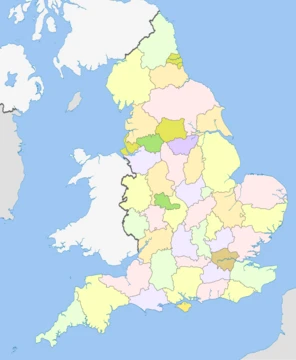
They are the traditional and modern subdivisions of England, functioning as both cultural identities (think Cornwall, Yorkshire) and administrative units that deliver local services. The system layers historic shires, ceremonial areas, and post-1974 government structures on top of one another, which is why the topic gets confusing fast.
How many counties are there in England?
The number shifts depending on which layer you count: 48 ceremonial counties, 21 non-metropolitan (two-tier) counties, or roughly 120 unitary authorities. Most casual references to 'the counties' point to the 48 ceremonial ones because they align best with the shires people grew up hearing about.
What's the difference between a ceremonial county and an administrative county?
A ceremonial county is defined by the jurisdiction of a Lord-Lieutenant and exists mainly for cultural, judicial, and flag-bearing purposes. An administrative (non-metropolitan) county is the tier of government that actually runs services like highways, education, and social care. In the southeast, the two often don't match because unitary authorities replaced the upper tier.
Which counties are the 'main characters' everyone talks about?
Cornwall, Yorkshire, and Kent consistently dominate public imagination thanks to their strong dialects, distinct landscapes, and heavy presence in literature, film, and sport. Rutland, at just over 600 square kilometres, is the perennial underdog that fans love pointing out as the smallest.
Where should a total newcomer start reading?
Begin with the 48 ceremonial counties, since they map most cleanly onto the historical shires and the flags you'll see at rugby matches. From there, branch into the 1974 and 1996 reorganisations to understand why the modern map looks the way it does.
What happened in 1974 and why does it matter?
The Local Government Act 1972, implemented in April 1974, redrew boundaries, merged or abolished several historic counties, and created six metropolitan counties around major cities. It remains the single biggest 'season reset' in the county story, and many identity disputes (West Midlands vs. Staffordshire, for instance) trace back to that date.
What is a unitary authority and why do some people dislike the term?
It is a single-tier council that handles all county- and district-level functions under one roof, replacing the old two-tier arrangement. Critics argue it erases the historic county identity of places like the former Essex or Suffolk districts, while supporters point to simpler, more accountable governance.
Why do some counties have flags and others don't?
County flags are largely a product of the 1990s English Flags campaign, and adoption is voluntary—there is no central body that mandates a coat of arms or banner for every area. That's why you'll see a strong flag culture in places like Lancashire and Kent while smaller or more recently formed areas still lack an official design.
What's the most common source of confusion for new fans?
The fact that a single postcode area can straddle multiple ceremonial, postal, and administrative counties simultaneously, compounded by the London anomaly where 33 boroughs sit inside the Greater London boundary but don't neatly reproduce old Middlesex or Surrey. Adding the Channel Islands and Isle of Man (Crown dependencies, not English counties) to the mix makes things even messier.
Are there any ongoing 'storylines' or unresolved debates?
Periodic boundary reviews by the Local Government Boundary Commission, the push for further devolution of powers to county-level bodies, and the recurring question of whether any remaining two-tier counties will be folded into unitary authorities all keep the topic alive. Fans also still argue passionately about whether the 'historic' pre-1974 map or the modern one should be treated as canonical.